What Are the Different Types of Corrugated Pipe?
News 2026-01-19
Corrugated pipes are key components in infrastructure, offering greater flexibility and strength than smooth-walled pipes. Their ribbed profile makes them ideal for applications like drainage, stormwater management, culverts, and cable protection. This article covers the different types of corrugated pipes to help you choose the best option for your project.
Materials Matter: Choosing the Right Pipe
The material of a corrugated pipe determines its durability, flexibility, and suitability for various applications. Here’s a breakdown of the most common materials used in corrugated pipes:
1. Plastic Corrugated Pipes
Plastic corrugated pipes are commonly used for drainage and outdoor applications, thanks to their lightweight, corrosion resistance, and ease of handling. Made from materials like HDPE, PE, PVC, or PP, these pipes come in two main types:
-
Single-wall pipes: Flexible and cost-effective, ideal for light-duty tasks like landscape drainage and French drains.
-
Double-wall pipes: The corrugated exterior provides added strength, while the smooth interior ensures efficient fluid flow, making them suitable for underground drainage and wastewater systems.
Plastic corrugated pipes are a practical choice for residential drainage, cable protection, and other non-heavy-duty applications due to their affordability and easy installation.
2. Metal Corrugated Pipes
Metal corrugated pipes, including Corrugated Steel Pipes (CSP) or Corrugated Metal Pipes (CMP), are designed to handle heavy loads and withstand harsh environmental conditions. Made from steel or aluminum, often galvanized for corrosion resistance, these pipes are commonly used in:
-
Road culverts
-
Storm sewers
-
Highways and bridges
Metal corrugated pipes are ideal when structural strength is required, especially for heavy-duty applications and locations subject to significant traffic or environmental stress.
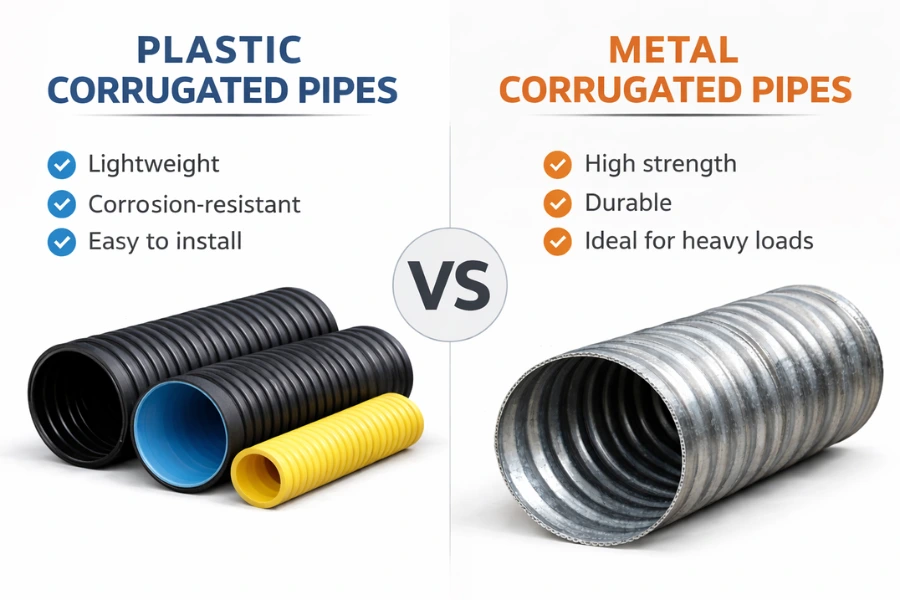
Comparison of plastic corrugated pipes (HDPE, PVC) and metal corrugated pipes (galvanized steel) highlighting durability and flexibility
Pipe Structure: How Design Impacts Performance
The design of a corrugated pipe impacts its ability to handle load, stress, and fluid flow. Choosing the right structural design ensures the pipe meets the specific demands of your project.
1. Single-lock Corrugated Conduit
These smaller-diameter pipes are used primarily for cable protection and electrical wiring. Made from PVC, PE, or nylon, single-lock pipes are budget-friendly and easy to install.
-
Affordable and effective for applications requiring flexibility and protection, such as underground wiring.
2. Double-lock Corrugated Pipe
Double-lock pipes offer a more robust structure compared to single-lock pipes. They are commonly made from HDPE or PVC, making them ideal for underground drainage or wastewater systems. These pipes have higher mechanical strength and a better ability to bear loads.
-
Stronger and more durable, making them suitable for urban drainage systems or any application where external pressure is a concern.
3. Bellows or Flexible Corrugated Pipe
Unlike rigid pipes, bellows-style pipes are highly flexible, making them ideal for applications like gas lines or appliance connections (e.g., CSST — corrugated stainless steel tubing).
-
The flexibility of these pipes allows for easy expansion control, especially in installations that need to withstand movement or shifting.
Pipe Applications: Tailoring Solutions to Specific Needs
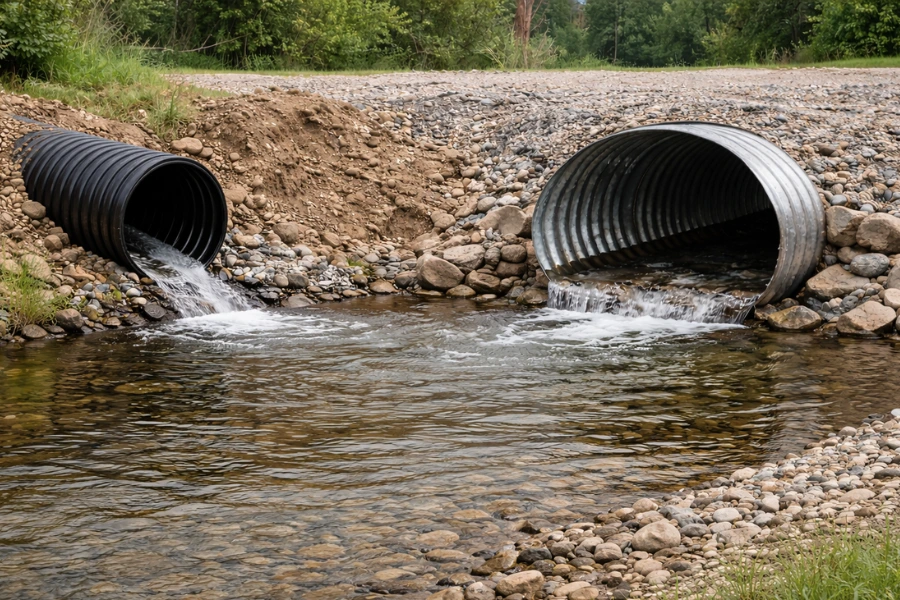
Corrugated pipes in use for drainage, culverts, and cable protection in construction projects
Corrugated pipes are also categorized based on the specific function they serve. Here’s a breakdown of the most common applications:
1. Drainage Pipes
Used to channel surface water or groundwater away from structures, drainage pipes are often perforated to allow water to flow in. These pipes are ideal for French drains and landscape drainage systems.
-
Perfect for residential and commercial drainage to prevent water buildup around foundations.
2. Culvert Pipes
Culverts are large-diameter pipes designed to allow water to pass beneath roads, railways, and other infrastructure. These pipes are made from either HDPE or metal, depending on the required load-bearing capacity.
-
Heavy-duty applications where pipes need to withstand the pressure from traffic and soil, such as transportation infrastructure projects.
3.Cable and Conduit Pipes
Corrugated pipes are also used as protective sleeves for electrical cables and communication lines, ensuring safety from external damage. These smaller-diameter pipes are made from plastic or flexible metal.
-
Crucial for safely housing electrical and communication lines in underground networks.
Special HDPE Corrugated Pipes: Built for Demanding Applications
HDPE corrugated pipes come in specialized variants designed for more specific applications. These types include:
Type C
Corrugated on both the inner and outer walls, Type C pipes provide a combination of strength and flexibility, making them suitable for applications requiring both characteristics.
Type S
Featuring a double-wall design with a smooth interior, Type S pipes are designed to ensure efficient fluid flow. These pipes are commonly used in sewer and drainage systems, where minimizing friction is essential.
Type D
Type D pipes combine smooth surfaces with rigid connecting elements, offering superior durability and strength. These pipes are commonly used for demanding civil engineering projects where high-performance materials are needed.
Key Takeaways
| Category | Examples |
|---|---|
| By Material | Plastic (HDPE, PVC), Metal (Steel, Aluminum) |
| By Structure | Single-wall, Double-wall, Flexible bellows |
| By Application | Drainage, Culverts, Cable conduit |
| Special HDPE Types | Type C, Type S, Type D |
Choosing the Right Pipe
Choosing the right corrugated pipe for your project depends on material, design, and application. Whether for home drainage or large-scale infrastructure, the right pipe ensures reliability and long-term durability.
At Ben-Thomas, we specialize in Metal Culvert Pipe Production Lines, setting industry standards. Trusted worldwide for projects in highways, railways, and water conservancy, Ben-Thomas is your go-to for quality and reliability.