Which Is Stronger, PVC or Corrugated Pipe?
News 2026-01-30
The job-site question behind the search
You’re standing over an open trench. The grade is set. Backfill is staged.
Now comes the call that decides whether this line lasts 30 years or comes back to haunt the job.
PVC or corrugated pipe — which one is actually stronger?
On paper, the answer looks simple. In the ground, it never is.
What “Strength” Actually Means on a Job Site
In the field, pipe strength is not a lab number.
It’s the pipe’s ability to carry load after burial, survive soil movement, and keep its shape year after year.
Strength shows up when:
-
Cover depth increases
-
Traffic loads pass overhead
-
Backfill settles unevenly
-
Freeze-thaw cycles start working the soil
This is where PVC and corrugated pipe behave very differently.
PVC Pipe – Rigid Strength That Resists Crushing
PVC is a rigid, solid-wall pipe. Its strength comes from material stiffness, not geometry.
On site, that stiffness delivers clear advantages:
-
High resistance to vertical soil load
-
Strong performance under shallow cover
-
Minimal deformation when backfill settles
-
Stable internal diameter that preserves flow
Once PVC is set and properly bedded, it tends to stay exactly where it was installed.
That predictability is why rigid PVC is commonly specified where load ratings and long-term shape retention matter.
Practical takeaway:
If the installation faces consistent vertical load and limited soil movement, PVC delivers reliable structural strength with few surprises.
Corrugated Pipe – Strength Depends on the Soil System
Corrugated pipe works differently.
Its strength does not come from wall thickness. It comes from shape and soil interaction.
The ribs increase ring stiffness, but only when:
-
Bedding is uniform
-
Backfill is well compacted
-
Side support remains consistent
When the soil envelope does its job, corrugated pipe carries load efficiently.
When it doesn’t, deformation shows up fast.
This same principle scales upward.
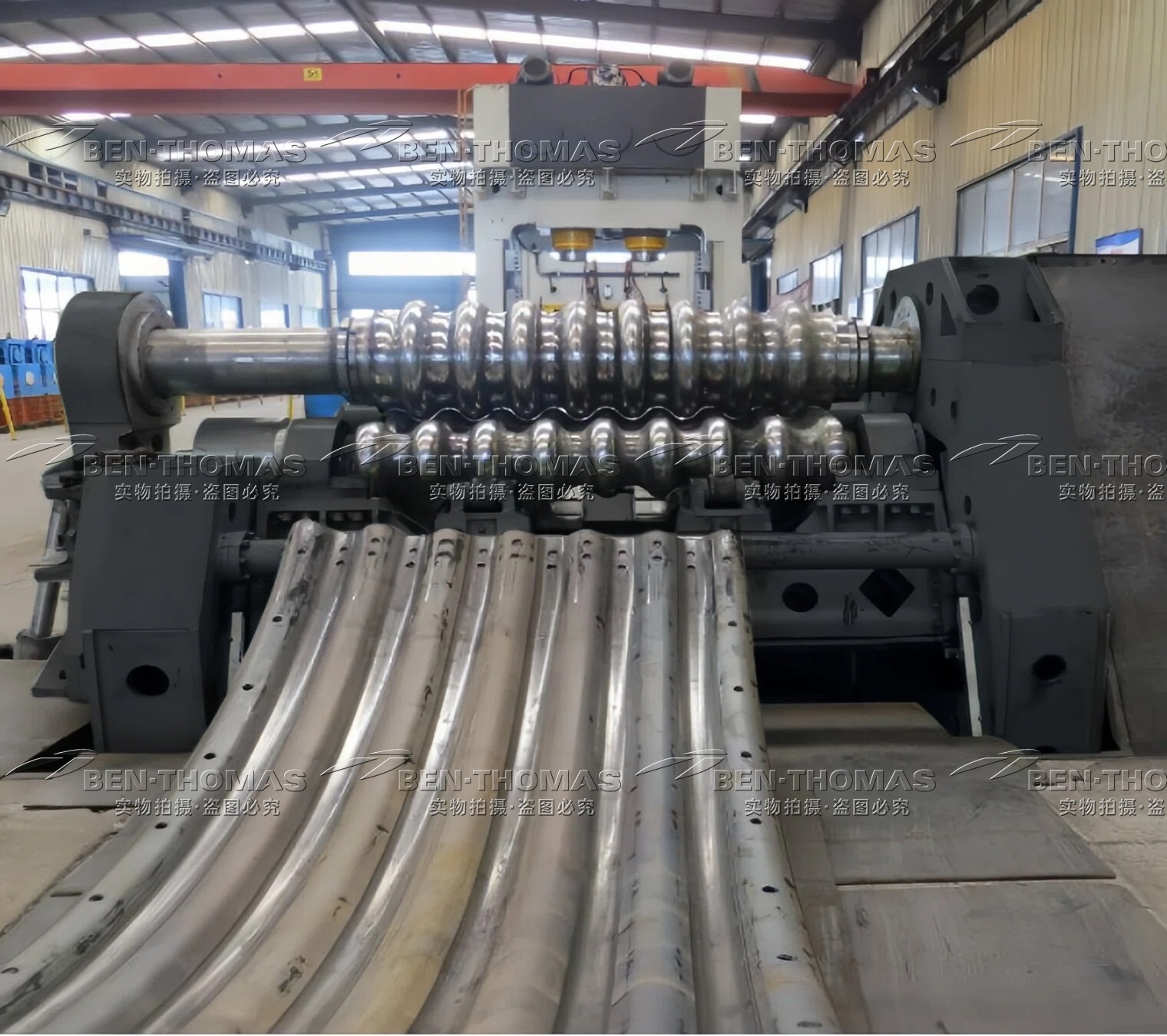
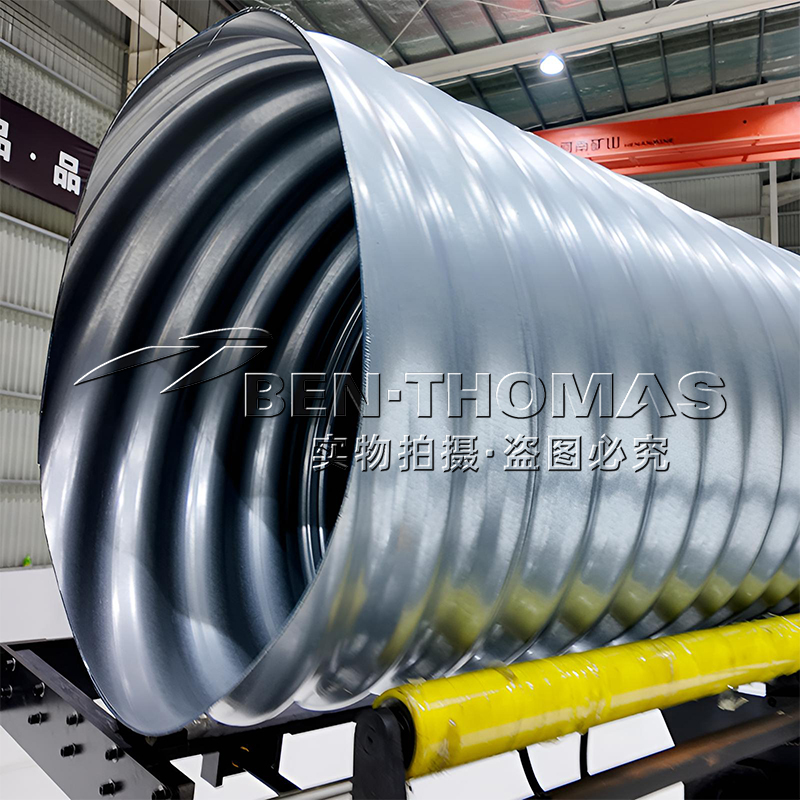
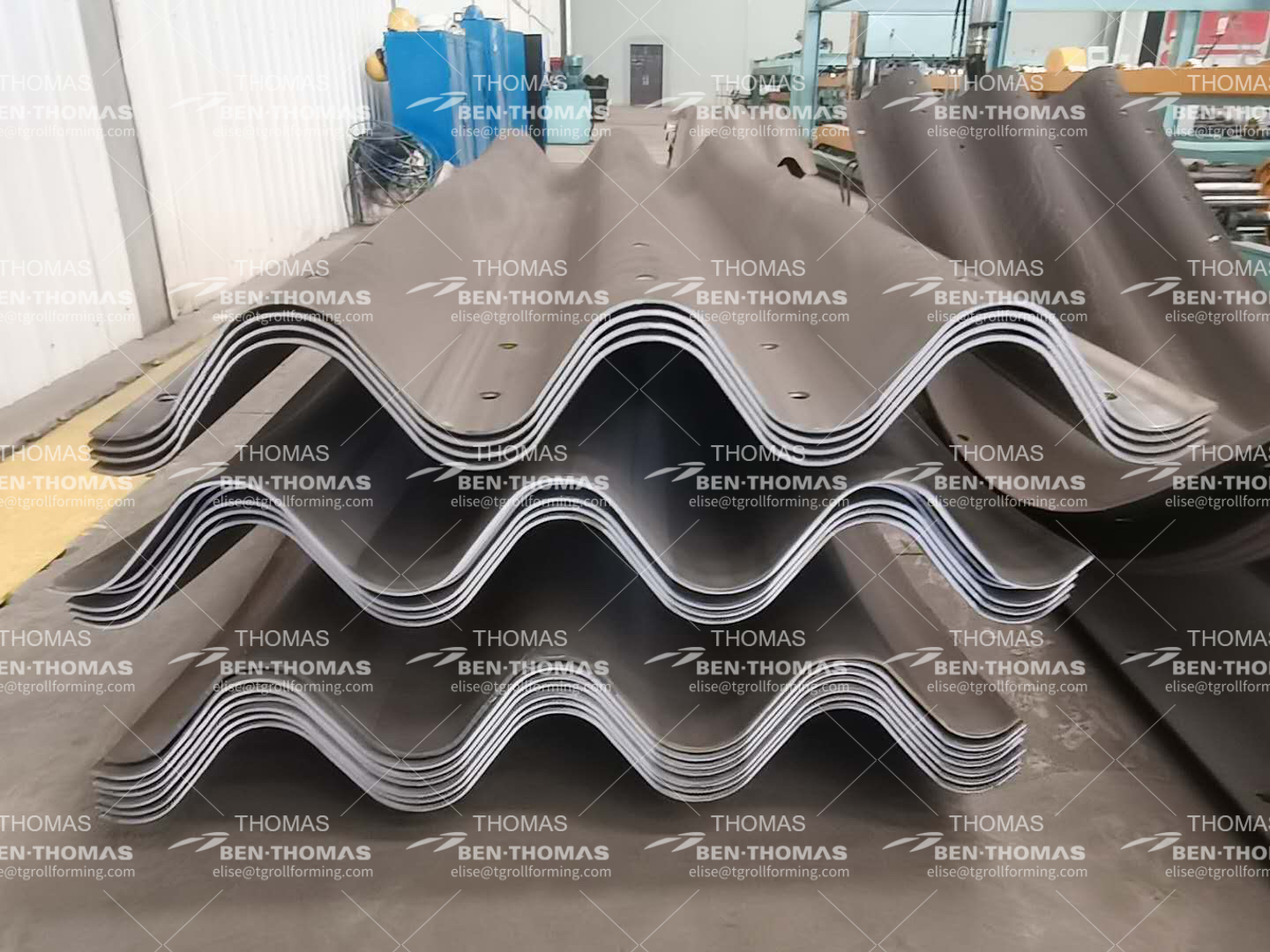
Large-diameter corrugated metal culverts use identical structural logic — but with steel thickness, rib geometry, and design standards engineered for highway, rail, and flood-control loads. That is exactly the structural approach behind Ben-Thomas corrugated metal pipe production lines used worldwide.
Practical takeaway:
Corrugated systems can be strong — but their strength is conditional, not inherent.
What Happens When the Ground Moves and Freezes
Rigid strength is not always an advantage.
In frost zones or unstable soils:
-
PVC resists movement
-
The ground does not
When freeze-thaw cycles lift and drop the soil, rigid pipe transfers stress to joints and walls. Over time, cracking risk increases if the soil moves beyond design assumptions.
Corrugated pipe behaves differently.
Its flexibility allows minor deflection without fracture. It may deform slightly, but it is less likely to crack under cyclic movement.
Practical takeaway:
In dynamic soils, strength is not about stiffness alone — it’s about controlled flexibility.
Choosing Pipe Based on Load, Soil, and Failure Risk
Here’s how experienced crews frame the decision.
-
High vertical load, traffic overhead, shallow cover
→ PVC provides reliable resistance to crushing -
Variable soil, frost action, irregular settlement
→ Corrugated pipe tolerates movement better -
Large spans, heavy infrastructure loads, long service life
→ Engineered corrugated metal systems become the standard
This is why highways, railways, and water-control projects rely on corrugated metal structures, not plastic alternatives, once loads exceed residential-scale assumptions.
Strength is not material strength.
It is system strength.
Installation Details That Decide Whether the Pipe Survives
Material choice alone does not prevent failure.
Most real-world problems trace back to:
-
Poor bedding preparation
-
Inconsistent side support
-
Inadequate compaction
A strong pipe installed poorly will fail faster than a weaker pipe installed correctly.
This is why experienced contractors evaluate installation class, not just pipe type, before committing.
Practical takeaway:
Installation quality determines whether theoretical strength becomes real performance.
Why High-Strength Corrugated Systems Dominate Infrastructure Projects
At infrastructure scale, plastic options reach their limits.
As diameter increases and loads grow, the industry moves toward:
-
Corrugated metal culverts
-
Engineered rib geometry
-
Verified load ratings
-
Long-term structural reliability
Ben-Thomas has focused exclusively on this segment for decades — designing and manufacturing complete corrugated metal pipe production lines that produce structures capable of handling extreme loads across highways, rail systems, mining sites, and flood-control projects on five continents.
This is not about preference.
It is about engineering necessity.
Final Verdict – Which Pipe Holds Up Better in Real Conditions?
There is no universal winner.
-
PVC is inherently stronger under direct load and stable conditions.
-
Corrugated pipe relies on soil support but handles movement better.
-
Corrugated metal systems take over when loads exceed plastic capability.
The correct choice depends on load, soil behavior, installation quality, and service life expectations.
Tools and materials matter — but it’s experienced judgment and proven systems that keep the trench from becoming a callback.